
Our Location
304 North Cardinal St.
Dorchester Center, MA 02124

A practical guide to protecting coffee beans from air, moisture, heat, and light at home.
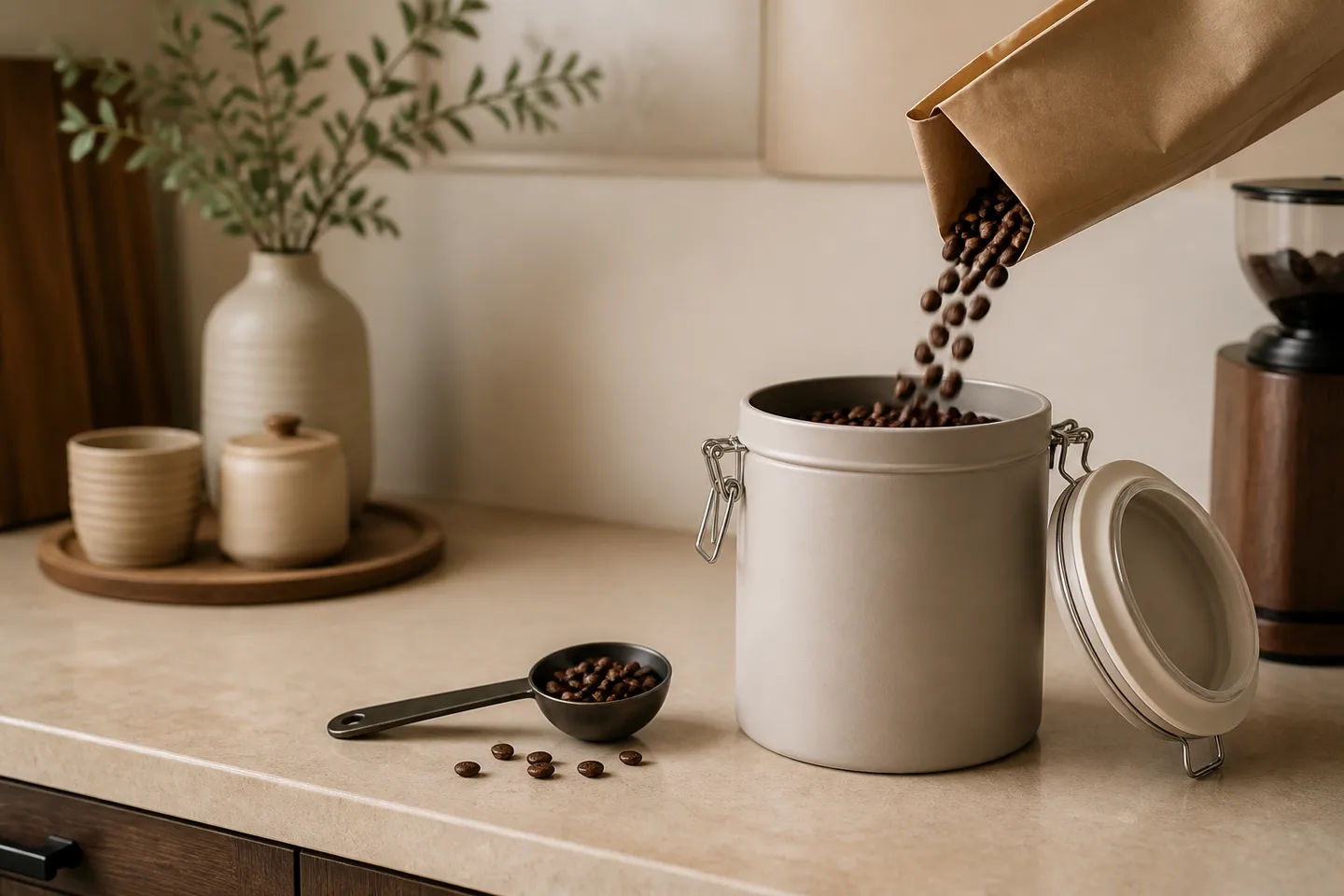
Store coffee beans in a clean, airtight container in a cool, dark, dry place. Keep the container away from windows, ovens, dishwashers, and other sources of heat or moisture. Buy an amount you can use while it still tastes lively, and grind only what you need for each brew whenever practical.
That simple routine matters more than turning coffee storage into a science project. The goal is not to stop roasted coffee from changing—it will—but to reduce the conditions that make aroma and flavor fade faster.
Roasted coffee is full of volatile compounds that help create its aroma. After roasting, those compounds continue to change and escape. The rate of change depends on the coffee, whether it is whole or ground, and the environment around it.
Four factors deserve the most attention:
• Air: Oxygen supports reactions associated with staling and aroma loss.
• Moisture: Roasted coffee can absorb moisture and surrounding odors.
• Heat: Warmer storage conditions generally speed physical and chemical changes.
• Light: Direct light can add heat and is one reason opaque storage is useful.
The Specialty Coffee Association’s review of coffee-staling research identifies oxygen, moisture, temperature, and the greater surface area of ground coffee as important parts of the freshness picture. That does not mean one container can freeze coffee in time. It means good storage can reduce avoidable exposure.
For everyday pantry storage, choose a container that closes reliably and limits air exchange. An opaque body—or a cabinet that keeps light away—adds protection from direct light.
A useful coffee container should also be easy to live with. Look for:
• A lid or seal you can close correctly every time
• Food-contact materials that are easy to clean
• A size that matches the amount of coffee you normally open
• An opening wide enough for filling and scooping without spills
• A design that does not force you to leave the lid open during your routine
An oversized container is not automatically better. As the amount of coffee drops, a large container leaves more empty space above the beans. More important, buying and opening more coffee than you can reasonably use creates a storage problem no lid can fully solve.
A kitchen counter can be convenient, but not every counter is a good storage location. Keep coffee away from:
• Direct afternoon sun
• The oven, range, toaster oven, or air fryer
• Steam from a kettle or coffee maker
• The warm or humid area around a dishwasher
• Strong-smelling pantry ingredients
A cabinet or pantry shelf is usually a practical choice. If you prefer to keep the container visible, select a shaded area with a stable room temperature.
Grinding dramatically increases the surface area exposed to the environment. It also accelerates degassing and the loss of volatile aroma compounds. For the best balance of flavor and convenience, store coffee as whole beans and grind the dose you need just before brewing.
Pre-ground coffee is still workable. Keep it tightly closed, use a clean and dry scoop, and avoid repeatedly leaving the container open. Buying a smaller package can be more helpful than moving a large quantity between several containers.
Freshness is easier to manage when the open supply matches your household’s pace. The National Coffee Association recommends buying smaller batches more frequently and gives one to two weeks as a practical buying amount for many drinkers.
Your actual pace may differ. A two-person espresso household may finish a bag quickly, while an occasional weekend brewer may need a smaller package or a plan to freeze sealed portions. Track how much you use in a typical week, then choose bag and container sizes around that number.
For coffee you use every day, a cool pantry is simpler than a refrigerator. Refrigerators introduce food odors, humidity, and temperature changes each time the container is opened.
Freezing can be useful for longer storage when it is done deliberately. Divide coffee into small, truly airtight portions, freeze each portion once, and let a sealed portion come to room temperature before opening it. This reduces repeated warming and condensation on the beans.
For a detailed decision guide, see Can You Freeze Coffee Beans?.
1. Measure the beans you need with clean, dry tools.
2. Close the container immediately after removing the dose.
3. Keep the container in its cool, shaded location.
4. Grind the measured dose shortly before brewing.
5. Refill only after checking that the container is clean and fully dry.
This routine limits the time the full supply spends exposed to room air and kitchen moisture. It also makes freshness easier to manage without complicated rules.
Coffee does not have one universal “fresh until” date. Bean type, roast, packaging, and storage all matter. Instead of relying on a single number, pay attention to the cup and the dry coffee:
• The aroma from the container is much weaker than before.
• Familiar flavor notes have become flat or muted.
• The brewed coffee tastes papery, dull, or stale despite a consistent recipe.
• Espresso becomes harder to dial in for reasons not explained by grind, dose, or water.
Loss of freshness is mainly a quality issue. Visible mold, moisture damage, or an unusual odor is different; do not brew coffee that appears contaminated.
An airtight container reduces uncontrolled air exchange. A vacuum canister goes a step further by removing some air from the container after it is closed. That can make sense for people who want a repeatable daily storage routine, but it still works best alongside fresh purchasing, sensible portions, and a cool storage location.
Flowcat’s Smart Coffee Preservation Canister uses automatic vacuum sealing, freshness tracking, and USB-C charging. Those features are tools for the routine; they do not replace good bean selection or careful brewing.
Yes, if the bag has a sound barrier, a working closure, and is kept cool and dark. A separate airtight container is useful when the original closure is weak, the bag is frequently left open, or you want a more consistent daily routine.
Clear glass does not block light. It can work inside a closed cabinet, but an opaque container is more forgiving if the coffee remains on the counter.
Only if that location is cool, dry, and shaded. Keep the beans elsewhere if the grinder sits near a sunny window, hot appliance, or steam source.
No. Lowering air exposure addresses one part of staling, but roasted coffee continues to degass and change. Avoid claims that any home container stops aging completely.
• National Coffee Association: Storage and shelf life
• Specialty Coffee Association: What is the shelf life of roasted coffee?
